
Baseline Risk Assessments & Audits
Conducted by a Qualified Ergonomics Risk Assessment Auditor
At OHS Safety, we provide professional baseline risk assessments and workplace audits to identify hazards, evaluate ergonomic risks, and improve overall workplace safety and compliance.
All assessments are conducted by a qualified Ergonomics Risk Assessment Auditor, ensuring a structured, legally aligned, and practical approach to workplace risk management.
What Are Ergonomic Risks?
The primary objective of an Ergonomic Risk Assessment (ERA) is to identify, evaluate, and analyse ergonomic risks in the workplace.
Ergonomic risks are defined as any characteristic, action, or workplace condition that may impair human wellbeing and overall system performance.
These risks may include:
- Task or activity-related physical risk factors
- Task or activity-related cognitive risk factors
- Environmental (physical and social) risk factors
- Organisational risk factors influenced by work methods and structure
Certain workplace conditions or actions may result in strain, discomfort, or injury, impacting employee wellbeing and productivity.
What Is an Ergonomic Risk Assessment?
An Ergonomic Risk Assessment (ERA) evaluates the interaction between people, tasks, equipment, and the work environment to determine acceptable and unacceptable risk levels.
It identifies ergonomic risk factors and provides a clear understanding of where improvements are required to enhance both human wellbeing and overall system performance.
Only by quantifying ergonomic risks can organisations prioritise and implement measurable workplace improvements effectively.
A clear understanding of ergonomic risks supports:
- Effective communication of hazards
- Prioritisation of corrective actions
- Implementation of workplace improvements
- Long-term safety and performance improvement
Purpose of Ergonomic Risk Assessments
Ergonomic Risk Assessments are used to identify:
- Workplace ergonomic hazards and stressors
- Physical, cognitive, and environmental risk factors
- Operational and organisational inefficiencies
- Risk levels affecting employee health and performance
These assessments form the foundation for improving workplace safety, reducing injury risk, and enhancing productivity.
Our Approach to Risk Assessments & Audits
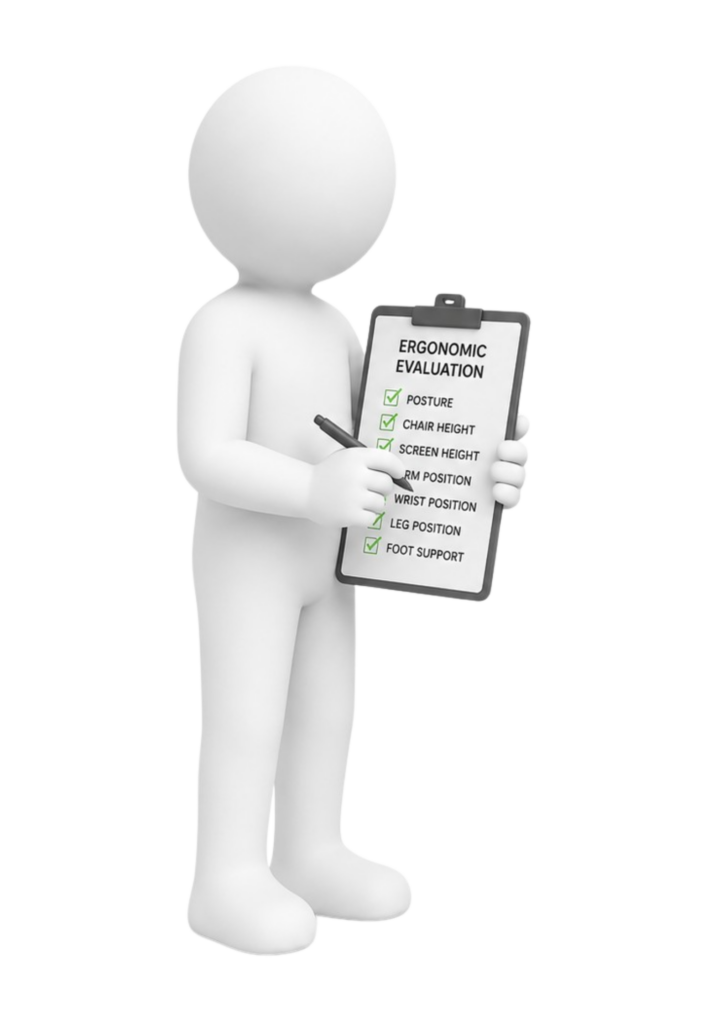
At OHS Safety, we apply a structured and practical risk assessment methodology.
We evaluate:
- Likelihood of risk occurrence
- Severity of potential impact
- Existing control measures in place
This allows us to prioritise risks and recommend practical, cost-effective corrective actions that align with operational needs.
What You Receive
After completion of the assessment, you receive a clear and structured report including:
- Identified workplace risks and ergonomic hazards
- Risk classification and prioritisation
- Audit findings and compliance gaps
- Practical corrective recommendations
- Actionable steps for improvement
All reports are designed to be clear, professional, and easy to implement.
Who This Service Is For
This service is suitable for:
- Construction and engineering environments
- Manufacturing and industrial facilities
- Warehousing and logistics operations
- Office and administrative environments
- Retail and hospitality sectors
- Educational and public institutions

Final Thoughts
At OHS Safety, we believe that understanding workplace risk is the foundation of a safe, productive, and compliant environment.
Our baseline risk assessments and audits provide the clarity businesses need to take action and improve workplace safety effectively.